


What is Urban Defensive System
Urban Defensive System (UDS) means “a structured method for people living in modern cities to protect themselves from all kinds of threats.”
It integrates the practical combat efficiency of Krav Maga with the fluid movement principles and “soft energy” of Chinese martial arts, creating a system that enables calm and effective defense against diverse risks in today’s world.
「Krav Maga」+「Chinese martial arts」
What is Krav Maga
Krav Maga is a self-defense and close-combat system developed in Israel, adopted by elite organizations such as the Mossad, SWAT, FBI, and GIGN.
In Japan, specialized units such as SAT (Special Assault Team), SST (Special Security Team), and other law enforcement and private security agencies also incorporate Krav Maga techniques.
Unlike traditional martial arts or competitive sports, Krav Maga focuses on realistic, survival-oriented movement, using the body’s natural reflexes to respond under pressure.
This makes it a system that anyone—regardless of age, gender, or strength—can learn effectively in a short period of time.
The One and Only Experience
As Japan’s youngest certified Krav Maga Black Belt (KMA), with additional training in Chinese martial arts and experience training in countries around the world, our instructor provides fully customized, tailor-made training programs designed to meet the specific needs of each company and organization.
Krav Maga Alliance (KMA) is an international organization headquartered in Los Angeles, USA, dedicated to teaching and promoting authentic Krav Maga. Founded by John Whitman, a sixth-degree black belt in Krav Maga, the Alliance unites certified instructors and training centers around the world. Its curriculum is based on the practical self-defense principles of Israeli Krav Maga, ensuring techniques that are realistic, efficient, and adaptable for both civilians and law enforcement.
Visit the official Krav Maga Alliance website for more information.
Tailored Programs

“Health Management” (Kenko Keiei in Japanese) is a strategic approach where the health of employees is managed from a business perspective.
Investing in the well-being of employees enhances vitality, productivity, and overall organizational performance—eventually leading to business growth and improved corporate value.
This initiative is recognized by Japan’s Ministry of Economy, Trade and Industry (METI) as part of national strategies such as the Japan Revitalization Strategy and the Future Investment Strategy, aimed at extending the nation’s healthy life expectancy.
Source: Ministry of Economy, Trade and Industry (METI), Japan
◯Health Management
Krav Maga training provides sufficient physical activity even in short sessions.
Through martial arts-based stretching and body movement, it helps alleviate neck and shoulder stiffness and supports overall physical well-being—making it an excellent choice for executives seeking to improve employee health.
◯Enhancing Communication
Most Krav Maga exercises are practiced in pairs, while some drills involve larger groups of four, five, or more participants.
This setting encourages natural communication among employees who may not usually interact, breaking down barriers and fostering teamwork in an engaging and dynamic environment.
◯Building Readiness for Emergencies
Although Japan is known as a safe country, incidents such as random attacks have shown that no place is completely risk-free.
Preparing employees with practical self-defense skills can be an essential measure to protect valuable human resources.
Unlike traditional martial arts, Krav Maga focuses on surviving disadvantaged situations—facing larger opponents, armed attackers, or multiple assailants.
This mindset fosters not only physical readiness but also mental resilience—the ability to stay calm, think strategically, and persist until a solution is found, even in high-pressure situations at work.
Meet the Instructor
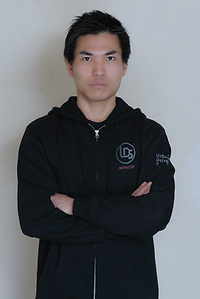
Yoshihiro Ohashi
Former Certified Trainer — Krav Maga Japan
Former Certified Trainer — Krav Maga Worldwide
Certified Black Belt — Krav Maga Alliance (Youngest in Japan)
He began Krav Maga training in 2012.
The following year, at only 21 years old, he became Osaka’s first officially certified assistant trainer and began teaching Krav Maga professionally.
Over the next five years, he trained approximately 200 members—including active police officers and Self-Defense Force personnel—while refining his approach to practical self-defense.
He has trained internationally in Hungary, Malaysia, Australia, and the United States, earning overseas security certifications and on-site experience.
In parallel, he studied Chinese martial arts body mechanics, focusing on how smaller-framed individuals can move efficiently and deliver power effectively.
Through this continuous domestic and international study, he developed a method that merges the direct efficiency of Krav Maga with the fluid, adaptive principles of Eastern martial arts.
In his hometown of Kobe, he founded Urban Defensive System—a modern, fully practical approach to self-defense—aimed at teaching skills that truly protect people in real situations.
For more personal background, see here.


Words from Clients

Membership & Programs
After confirming details such as location, number of participants, training duration, and goals, we will design a fully customized program tailored to your needs.
Please use the form below to send us your inquiry.
We also accept requests for private one-on-one lessons or small-group sessions for individuals.
Contact

About the Logo
The central emblem of the Urban Defensive System logo is based on a shield, symbolizing protection, defense, and safety.
Within the shield, fluid curved lines express the flow and soft power of Chinese martial arts philosophy—
representing harmony and adaptability.
This design merges the straightforward realism of Krav Maga with the refined fluidity of Eastern movement, symbolizing the balance between strength and flexibility.
The circle intentionally features two subtle openings, signifying the idea of constant evolution—
embracing timeless principles while continuously adapting techniques to modern challenges (Fueki Ryūkō — “constancy and change”).